


 Log in
 Log out
European Winter Storm Klaus
Status: Closed
| Type of posting | Posting date(EST): | Summary | Downloads |
|---|---|---|---|
| Update 3 | 2/18/2009 10:30:00 AM |

|
|
| Update 2 | 1/27/2009 4:00:00 PM |
|
|
| Update 1 | 1/26/2009 2:30:00 PM |
|
|
| First Posting | 1/25/2009 7:30:00 PM |
|
Update 3 | Summary
Posting Date: February 18, 2009, 10:30:00 AM
On January 27, three days after winter storm Klaus swept across Southern France, AIR posted a preliminary range of industry insured loss estimates of between €350 million and €650 million. That range was based on the reported wind speed data (METARs) available at the time, which was used as input to the AIR Extratropical Cyclone Model for Europe.
Since that posting, AIR has obtained and analyzed additional wind speed data from a meso-network of observing stations run by Metéo France. The new data represent wind gust values from more than 700 weather stations across France.
In addition, AIR engineers have had the opportunity to evaluate detailed data collected by AIR’s post-disaster survey teams, who were dispatched to affected areas of southern France within two days of the storm. (A brief overview of their findings is available below. An extended version will be published in this month’s AIR Currents.)
The additional wind speed and damage data have been used to develop five new industry loss scenarios, which range from €500 million €1 billion. These losses represent damage to buildings and contents of onshore residential, commercial and agricultural properties. Please note, however, that the agricultural line of business in the AIR model does not include losses to commercial forestry, but rather damage to agricultural buildings and their contents.
There are other sources of uncertainty in these estimates that may ultimately result in industry losses higher than those posted here. One, as suggested above, is losses to forestry. Forestry officials have indicated that as much as 60% of the trees in the French department of Landes, which is home to Europe’s largest maritime forest and the source of some 30% of France’s lumber, were felled by Klaus. While it has been suggested that perhaps only 5% of forestry losses will be covered under property policies, this is not insignificant given the scale of destruction.
In addition—and closely related to the widespread uprooting of trees which in turn brought down power lines across the region—losses to utility companies may be significant. At the height of the storm, more than 1.7 million households in France were without power and the AIR survey teams saw utility repair crews on virtually every road they traveled.
While the AIR survey teams did not observe significant damage to large numbers of commercial properties, Business Interruption (BI) losses remain an unknown—and relate, at least in part, to the power outages mentioned above. The industry exposure database (IED) reflected in the current model release includes buildings and contents exposures but not BI exposures. However, it should be noted that clients can model BI in CLASIC/2.
There has also been some indication by French insurers that they will waive deductibles for this event. If they do so, given the observed frequency of damage, actual losses may be as much as 10% to 20% higher than modeled losses.
Finally, preliminary research into our industry exposures for France, which is being undertaken in conjunction with a major update to the AIR Extratropical Cyclone Model scheduled for this fall, suggests that actual total sums insured aggregates for France are likely higher than what is currently accounted for in the model. This discrepancy could contribute to an underestimation of industry insured losses. (Note that there are significant challenges in estimating sums insured values for France given the traditional insurance practices in effect there. The updated model will include the latest vintage of high-resolution information on construction and occupancy, using a cost-rebuild approach.)
However, it is important to note that any underestimation in AIR’s industry exposure has no bearing on modeled losses for our clients who model their own property portfolios in CLASIC/2. Similarly, modeled losses for CATRADER users who use sums insured or risk counts are unaffected. Clients are encouraged to run their portfolios against the newly provided even set for better estimation of losses to their portfolios.
The damage observed by AIR’s survey teams was, in general, of relatively low intensity but relatively high frequency. As a result, it may be quite some time before losses fully develop. The AIR extratropical cyclone modeling team will monitor loss development closely, as they continue to analyze both meteorological data and damage data for this storm.
Overview of Damage Survey Findings
Two days after the passage of winter storm Klaus across southern France, AIR dispatched post-disaster survey teams to affected areas of France to assess the damage. The teams catalogued damage observations using detailed survey forms that capture information on individual structures, including their geocoded location, and factors affecting vulnerability (such as age, construction, roof type and occupancy).
Residential properties, dominated by unreinforced masonry construction with low-pitched roofs, suffered a fairly high incidence of minor roof tile damage (as much as 10% of properties in some areas visited). Clay roof tiles, common in southern France, are often not mechanically attached to the roof and thus can be blown off by high wind. Tiles at the corners and ridges experience the highest wind load, and indeed this was the most common type of damage observed. The teams also observed damage to the undersides of roofs with large overhangs, where wind can be trapped to create localized loads of upward pressure.
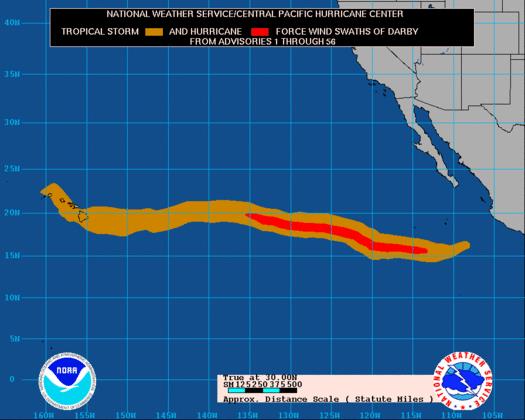 |
| Figure 1. Roof tile damage to low-rise masonry and to four-story reinforced concrete construction in Pessac (Source: AIR) |
For commercial properties, the most common type of damage observed was to light metal construction in which sheet metal roofs and siding had been peeled away during the storm. Long span structures are particularly vulnerable, even at low to moderate wind speeds.
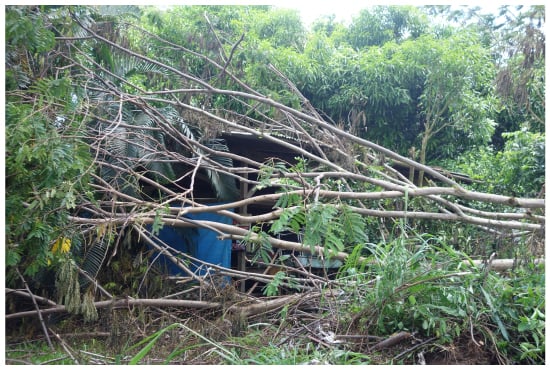 |
| Figure 2. Roof and siding damage to low-rise light metal commercial buildings in Dax (Source: AIR) |
Severe structural damage caused directly by wind was rare, which is consistent with expectations given the reported wind speeds and dominant construction types. However, there were many cases in which trees had fallen onto properties, causing more significant structural damage. At a campsite in Saguinet in the department of Landes, an estimated 150 caravans (mobile homes) were destroyed by downed trees. Forestry officials estimate that over 60% of trees in Landes, which was the source of about a third of France’s lumber production, were destroyed.
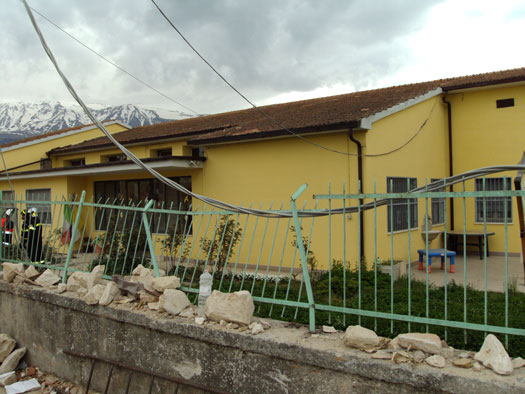 |
| Figure 3. Downed trees in the Landes (Source: AIR) |
The survey team saw widespread damage to power and telephone lines caused by downed trees. Utility repair crews working to restore service were seen along roads throughout southwestern France. According to the EDF, power was restored to almost all customers within a week. Nevertheless, losses to utility companies may be significant.
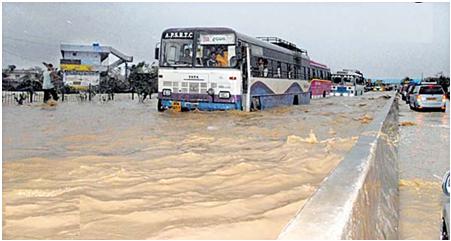 |
| Figure 4. Utility repair crews out in force (Source: AIR) |
In general, direct wind damage caused by Klaus to properties in southern France was relatively minor, though the incidence of damage was relatively high. Significant structural damage was limited almost entirely to cases where large trees had fallen onto buildings. AIR wind engineers will continue to analyze the detailed data collected during the course of the damage surveys for Klaus, and use the findings to inform the next release of the AIR Extratropical Cyclone Model for Europe.